date_range
Monday 22 Dec 2025


 LOCAL EDITION
close
 LOCAL EDITION


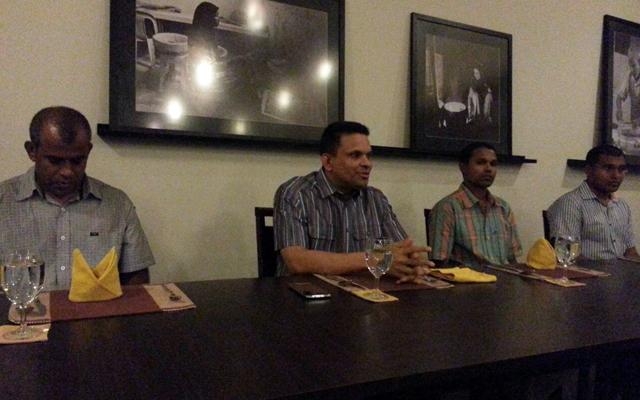
Member appointed to Local Government Authority by the President, Minister of Defence and National Security Mohamed Nazim has said that he will put his name forward to serve as President of LGA.
In reply to a question posed by Sun during a dinner for local reporters hosted by the Defence Minister on Wednesday night, he said that he will put his name forward at the LGA meeting scheduled for the following day, Thursday.
“I am considering putting my name forward to serve as President of LGA,” he said.
The member appointed by the President was elected as LGA’s President during the former administration as well.
According to Article 63 of the Decentralisation Act, a President and Vice President must be elected to LGA through a secret vote by its members.
Nazim said that LGA is an independent institution, and its authority needs to be defined.
“At the moment, LGA is like a shark without teeth. It is the oversight body in the decentralised system, but the law doesn’t give it much authority in monitoring the activities of councils. The activities carried out by the councils are decided by the councils themselves. They create their own regulations and policies,” he said.
He said that procedures must exist to ensure that the people benefit from decentralisation.
“From the way the decentralisation system functions at the moment, the only thing some council members do is ‘warm their seats’. This is probably not the most beneficial way to go about this,” he said.
He said that major amendments will be proposed to the Decentralisation Act, including proposing that all council members other than its president and vice president work part time.
“This would mean that capable people in the islands, such as school principals and teachers, would have to attend council meetings just once a week. This would save about MVR 200 million for the State,” he said.
When asked if he is hopeful about winning the election for LGA President, Nazim said, “The outcome will be positive.”
The Board of LGA is made up of nine members. They are a cabinet minister appointed by the President, a member appointed by Male’ City Council, four members elected from Atoll Councils, a member of an NGO elected by the parliament, a member of the public elected by the parliament, and a member elected from City Councils.