date_range
Saturday 31 Jan 2026


 LOCAL EDITION
close
 LOCAL EDITION


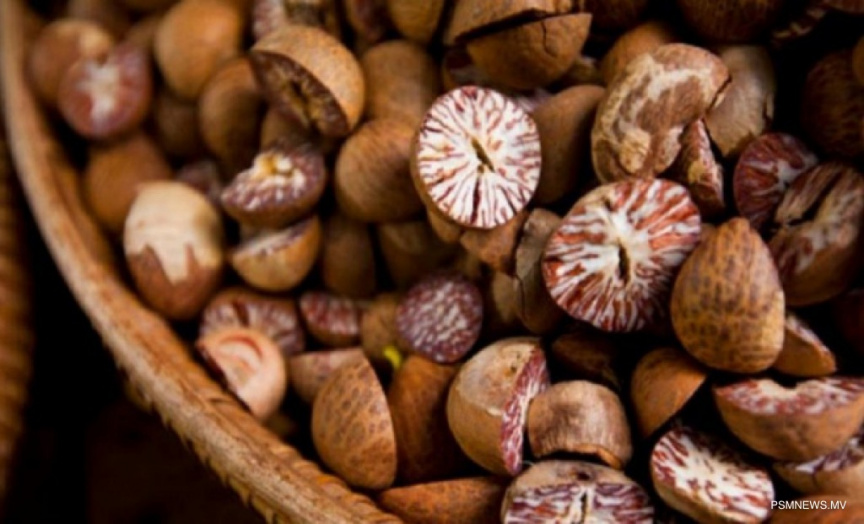
Areca nuts in a bowl: Kulhudhuffushi Dr Mohamed Ali warns it as a carcinogen, making a public appeal to wean off the addiction, January 31, 2026. (Photo/PSM)
Chewing areca nut remains a deeply rooted habit in Maldivian culture, used after meals, shared during social visits, and offered to guests as a gesture of hospitality. Despite its cultural significance, medical experts continue to warn that regular use carries documented health risks.
Internal medicine specialist Dr. Mohamed Ali, speaking from his hometown of Kulhudhuffushi on Saturday, advised the public to reconsider the habit. Sitting on a swing, he explained why it was important to encourage families to avoid areca nuts.
According to Dr. Mohamed Ali, international research has classified areca nuts as a carcinogenic substance. “Ramadan is beginning. Let’s try to stop chewing areca nuts before that,” he said, adding that studies indicate the risk of cancer increases further when areca nuts are combined with tobacco. “Research shows it can increase the percentage of cancer by 50 percent,” he said, referring to findings from global health bodies.
He suggested alternatives such as cinnamon sticks, which he personally uses, and encouraged the public to choose safer mouth‑freshening options.
Areca nut use has been linked in multiple studies to oral cancers, and the World Health Organization reports that the Maldives has the highest incidence of oral cancer in South Asia. Health professionals also note that chewing hard substances like areca nuts can contribute to cracked teeth and dental decay.
Dr. Mohamed Ali emphasized that reducing or avoiding areca nuts could help lower these risks. Healthier post‑meal options, he said, include natural mouth fresheners such as fennel, cumin, cardamom, or cinnamon.