date_range
Tuesday 03 Feb 2026


 LOCAL EDITION
close
 LOCAL EDITION


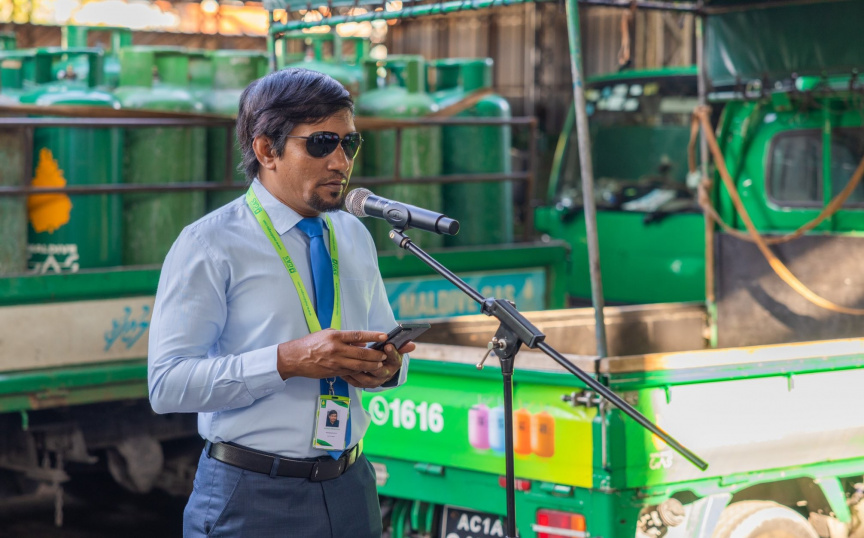
Maldive Gas' Managing Director Abdulla Mohamed. (Photo/Maldive Gas)
A motion has been submitted to Parliament seeking a full inquiry into the loss of an advance payment of around USD 250,000 from an USD 800,000 liquefied petroleum gas (LPG) shipment ordered by state‑owned Maldive Gas in October 2024.
The issue first surfaced during a meeting of Parliament’s Public Accounts Committee last April, when Deputy Speaker Ahmed Nazim said the company had paid an advance for an LPG shipment that never arrived. He said efforts to recover the money had so far been unsuccessful.
Maavah MP Ahmed Shakir has now written to the Speaker requesting that the matter be investigated through Parliament’s State‑Owned Enterprises (SOE) Committee, describing the missing advance payment as a serious allegation involving a government company.
Shakir’s letter also noted concerns over a social media post by Maldive Gas Managing Director Abdulla Mohamed, which he said appeared to have intimidated MDP parliamentary group deputy leader and Vaikaradhoo MP Hussain Ziyadh, as well as Hulhumale' South MP Ahmed Shamheed. He asked that this matter also be reviewed by the relevant parliamentary committee.

During an extraordinary sitting on January 5, Ziyadh accused Abdulla of gambling away the advance payment. He cited the Public Accounts Committee’s discussions, saying the missing amount was “USD 250,000” and alleging the managing director had “played with the bet.”
Ziyadh also questioned whether the allegations would be investigated if Parliament passes the proposed amendment to the Penal Code that criminalises gambling.
Responding in Parliament, Abdulla denied ever engaging in gambling or betting, saying that being an MP “is not an opportunity to slaughter reputation.”
Police have also launched a money‑laundering investigation involving Maldive Gas.
Maldive Gas, a subsidiary of STO, has faced corruption allegations in the past. Investigations during the previous MDP administration included a case involving the alleged theft of medical oxygen cylinders procured during the COVID‑19 pandemic.