date_range
Saturday 31 Jan 2026


 LOCAL EDITION
close
 LOCAL EDITION


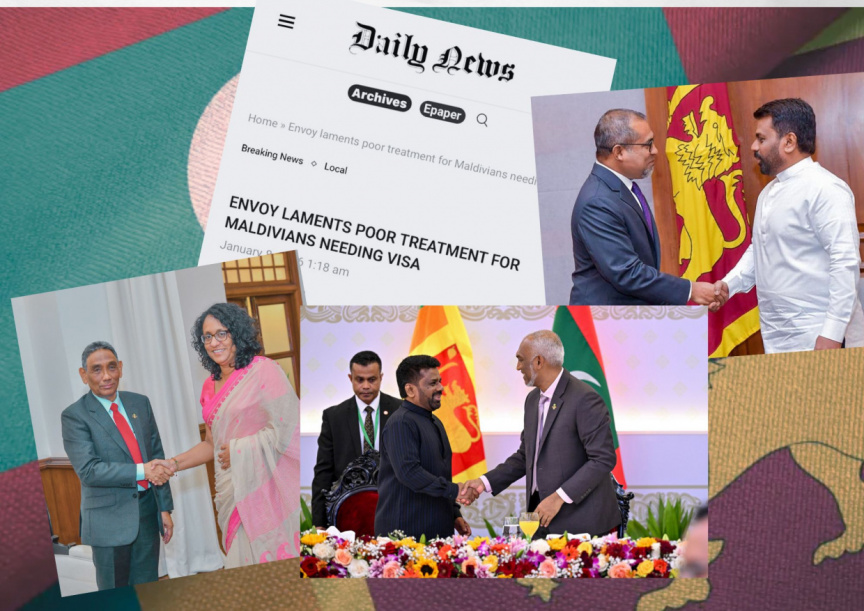
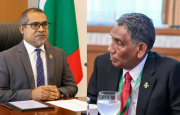
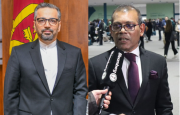
The Maldivian High Commissioner to Sri Lanka, Masood Imad, has recently made a profound and unexpected statement regarding the significant challenges Maldivians encounter when seeking long-term residency visas in Sri Lanka. He characterized the current treatment of Maldivians as "stepmotherly."
Furthermore, he issued a stern warning that if these difficulties persist, the Maldives would be compelled to enforce stricter regulations against Sri Lankan nationals residing in the country.
These remarks dominated yesterday’s headlines, and for a significant reason. In an interview with the Sri Lankan media, High Commissioner Imad delivered a substantial ultimatum. These are the words of a high-ranking diplomat tasked with representing the state and safeguarding Maldivian interests in Sri Lanka.
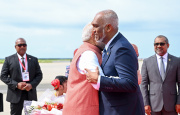
The memory of the "India Out" campaign remains fresh, where the inflammatory rhetoric of certain senior government activists strained relations with our neighbor, India, to a critical point. Those diplomatic scars have yet to fade. During that period, President Dr. Mohamed Muizzu was also perceived to have made missteps with his remarks concerning "bullying."
Before the wounds from that previous diplomatic friction could heal, we are faced with a similar predicament. This situation casts a shadow over the pristine, sixty-year diplomatic relationship between the Maldives and Sri Lanka.
This raises a critical and pressing question: Are we witnessing the beginning of deteriorating ties with yet another neighboring nation?
The Enduring Bond: Why Sri Lanka Remains Special to Maldivians
Sri Lanka has always held a uniquely significant place in the hearts of Maldivians. Our shared history is rich with accounts of early Maldivian voyagers traveling to Colombo by traditional wooden vessels (Naubatteli), establishing a foundation for trade relations that have thrived for generations.
In the realm of education, the impact of Sri Lanka is profound. Countless Maldivians have pursued their academic dreams in Sri Lankan schools and universities. Indeed, the educational journey of a Maldivian student is often considered incomplete without the guidance and knowledge imparted by a Sri Lankan teacher. Furthermore, as travelers, few Maldivians have missed the opportunity to explore the scenic beauty of Sri Lanka's renowned tea plantations.
The relationship between the people of the Maldives and Sri Lanka is built on a foundation of mutual respect, extending across culture, commerce, education, and healthcare.

The strength of this enduring friendship was recently reaffirmed during a time of crisis. When vast areas of Sri Lanka were devastated by flooding following Cyclone Ditwah, the Maldives was the first to step forward. Despite being a small nation, the Maldives led by example, providing significant relief and support. This gesture was deeply appreciated by the people of Sri Lanka and stands as a powerful testament to the unwavering and historic bond between our two nations.
"From a geopolitical perspective, Sri Lanka does not possess characteristics that would pose a concern for the Maldives. Unlike some major neighboring powers, Sri Lanka does not harbor ambitions of global dominance or superpower status. Instead, its focus remains on revitalizing its domestic economy and fostering close ties with regional neighbors. Furthermore, like the Maldives, Sri Lanka is an island nation.
The core pillar of its foreign policy is 'friendship towards all, enmity towards none.' Sri Lanka also shares the policy of non-alignment, avoiding partiality towards any particular global bloc. This shared diplomatic outlook facilitates the promotion of friendship and cooperation between the Maldives and Sri Lanka, making the relationship between the two nations uniquely significant.

What would happen if a stone were cast into such friendly, peaceful, and tranquil waters? It would inevitably create ripples across the surface.
Tensions Escalate Following the High Commissioner’s Remarks
It is an undeniable reality that the High Commissioner’s direct warning has strained the diplomatic relationship between the governments of both nations. Furthermore, the intensity of public discourse surrounding this matter reflects a deep-seated concern among the Maldivian people. It is only natural for Maldivians to question the nature of this response, especially considering the sincere assistance provided to them in the recent past. One cannot help but wonder if this is the expected reciprocity for our goodwill. Such questions are a clear manifestation of the underlying unease currently felt by the public.
"If we simply stop issuing visas to Sri Lankans, it will become clear who truly stands to lose," and "Perhaps it is time to start a 'Lanka Out' movement," are among the public sentiments shared on social media in response to the news report published by "Sun Online" regarding the High Commisisoner’s comments.
Had this situation been approached through the principles of consultation and peaceful dialogue from the outset, this outcome could have been avoided. Instead, we are now seeing a rise in resentment and animosity that did not previously exist.
In the sphere of foreign diplomacy, it is not standard practice for a nation to broadcast every internal grievance to the global community or the general public. Disclosing such sensitive matters to the media and the public during the preliminary stages, before any formal resolution has been reached, often leads to detrimental consequences. It unnecessarily opens the door to petty disputes that should have been managed with greater discretion.
'Such conduct regarding a bilateral issue is deemed unacceptable'
In diplomatic terminology, this is classified as a "bilateral" issue, a matter concerning two specific parties. Disputes arising from consular services, such as visa processing, are subjects for negotiation and resolution under the framework of Vienna Convention on Consular Relations.
Matters of this nature are typically resolved through dialogue between the relevant officials of both parties, based on mutually agreed principles. While some instances may involve prolonged deliberations, others may reach a swift conclusion and implementation. Regardless of the timeline, such processes necessitate utmost patience and diplomacy.
Some seasoned foreign service professionals observe that the core issue stemmed from an unnecessary and harsh warning issued in a moment of heightened emotion.
"This is the 'bread and butter' of a diplomat's role. A High Commissioner should be capable of resolving such matters through diplomatic channels without exposing them to the media. To handle it in this manner only highlights our own incompetence. This is a sad day for the Maldives' Ministry of Foreign Affairs," stated Dr. Farahanaz Faisal, who has previously served as the High Commissioner to the United Kingdom and held several senior positions within the foreign service.

Furthermore, former Attorney General Azima Shakoor also maintains that this is not how a High Commissioner should conduct themselves in such a matter. She questioned whether the bitter experiences resulting from the 'India Out' campaign were not already sufficient.
"I sincerely hope that we do not resume "podium and media diplomacy" with one of our closest neighbors," Azima wrote on her Facebook page.
This marks another misstep in the current administration’s foreign policy. We are already grappling with the loss of previously available grants and aid, primarily due to strained international relations.
Diplomacy is an art. It is not merely the ability to speak eloquently or engage in disputes. Rather, it is the skill of advancing national interests on the global stage through dialogue and consultation—resolving issues peacefully without resorting to conflict and reaching mutually beneficial outcomes. This requires immense patience and time. It is a skill that can only be mastered by those possessing the capacity to listen to unpleasant truths and grievances from others.
Maldivians have already witnessed the bitter repercussions of deteriorating relations with a neighboring nation. It is certain that the people have no desire to relive such a challenging experience. The pressing question remains: to what extent do our diplomatic officials possess the expertise and capacity to resolve the current impasse effectively?