date_range
Thursday 29 Jan 2026


 LOCAL EDITION
close
 LOCAL EDITION


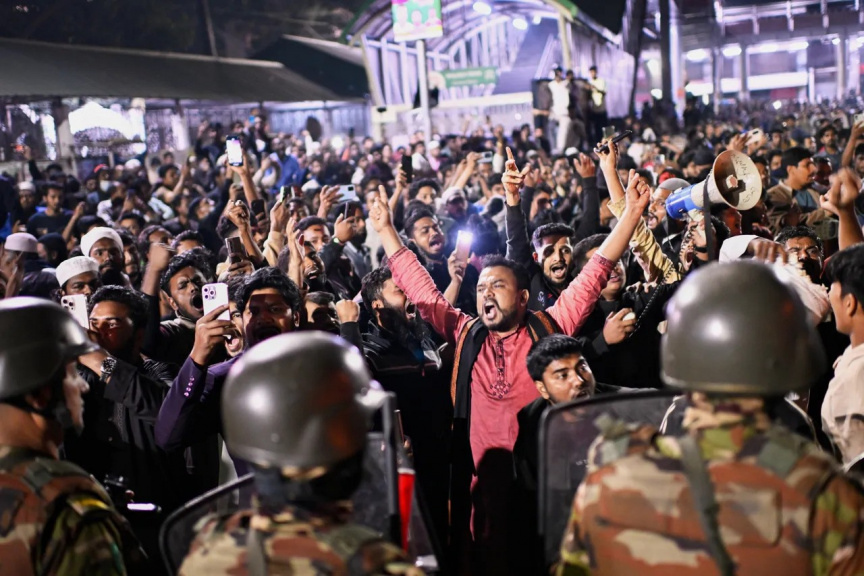
People protest in Bangladesh after political leader Sharif Osman Hadi, a prominent figure in the 2024 student uprising, shot in the head dies in Singapore hospital. (Photo/AP)
Bangladesh has plunged into its worst wave of unrest since the fall of former Prime Minister Sheikh Hasina in 2024, with violent protests, minority attacks, and rising anti‑India sentiment shaking the country ahead of elections scheduled for February 2026.
The latest escalation began after the death of Sharif Osman Hadi, a prominent youth leader and key figure in the 2024 uprising, who succumbed to gunshot injuries on December 18, 2025. His killing has triggered riots, arson attacks, and mob violence across major cities, deepening concerns about the country’s fragile political transition.

Following the announcement of Hadi’s death, thousands took to the streets in Dhaka and other cities. Mobs torched buildings belonging to major newspapers, including Prothom Alo and The Daily Star, accusing them of being aligned with India. Cultural institutions such as Chhayanaut and Udichi Shilpigoshthi were also attacked.
In Chattogram, protesters hurled stones at the Indian High Commission, prompting India to suspend visa services in the city.
The UN condemned the killing and urged authorities to ensure a transparent investigation while calling for restraint from all sides as the country heads toward elections.
In a separate incident on December 18, a 25‑year‑old Hindu man, Dipu Chandra Das, was lynched and burned publicly after allegations of blasphemy in Mymensingh district. The killing has intensified fear among religious minorities, who say attacks have increased since Hasina’s ouster in 2024.
Authorities have arrested at least 12 suspects, but rights groups warn that the interim government has failed to protect vulnerable communities.
#WATCH | Bangladesh: Visuals of the aftermath from The Daily Star office in Dhaka, which was burned down by protesters.
— ANI (@ANI) December 19, 2025
After the death of Osman Hadi, a key leader in the protests against Sheikh Hasina, Bangladesh has erupted in unrest, and two newspaper offices have been set… pic.twitter.com/dpKn5h97fI
The current turmoil is rooted in the dramatic events of mid‑2024, when student‑led protests over civil service quotas escalated into a nationwide uprising. The movement forced Sheikh Hasina to resign and flee the country, ending her long rule.

An interim government led by Nobel laureate Muhammad Yunus took over, promising reforms and fresh elections. But the transition has been marred by:
power struggles between political factions
rising extremism
economic instability
worsening relations with India
The killing of Hadi, a central figure in the 2024 protests and a vocal critic of India, has reopened old wounds and reignited tensions.
The unrest has strained relations with India, which had maintained close ties with Hasina’s government. After attacks on Indian-linked institutions and diplomatic premises, Bangladesh suspended visa services in New Delhi, Siliguri, and Agartala, citing security concerns.
India has condemned the violence and expressed concern over the safety of minorities in Bangladesh.

Bangladesh is scheduled to hold general elections on February 12, 2026, but the escalating violence has raised doubts about whether a peaceful vote is possible. Hadi had planned to contest the election before his assassination.
The UN has warned that the political environment is becoming increasingly dangerous, urging all parties to avoid retaliation and ensure a peaceful electoral process.
Maldivians living in Dhaka, mostly students and medical patients, are advised by the Maldivian government to remain cautious as violence has been concentrated in major urban areas.
With political violence, minority attacks, and diplomatic tensions rising simultaneously, analysts warn that Bangladesh is entering a dangerous phase. The interim government faces mounting pressure to restore order, ensure accountability for Hadi’s killing, and stabilize the country before the February polls.