date_range
Saturday 07 Feb 2026


 LOCAL EDITION
close
 LOCAL EDITION


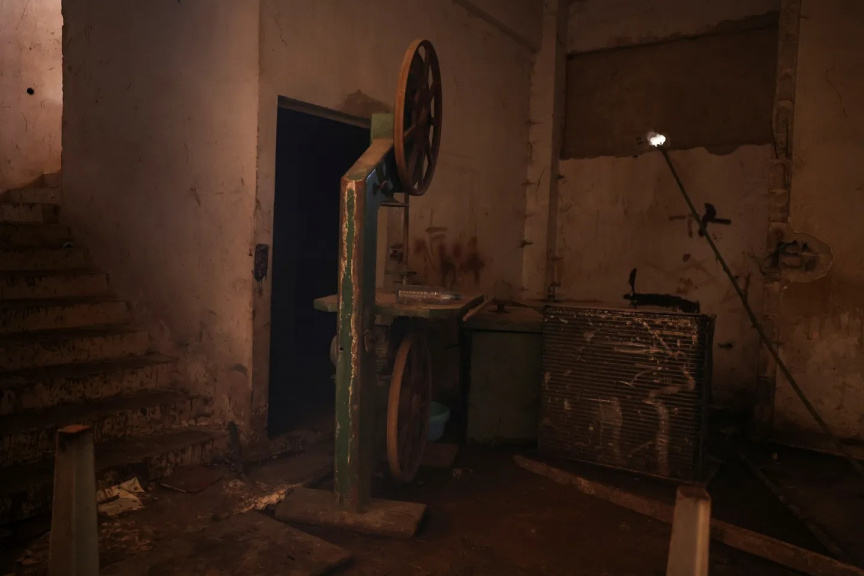
International Consortium of Investigative Journalists (ICIJ): Newly obtained cache of more than 33,000 photographs documents the torture, starvation, and mass killing of over 10,200 detainees under Syrian regime leader Bashar al Assad’s rule. (Photo/Reuters)
The International Consortium of Investigative Journalists (ICIJ) reported that a newly obtained cache of more than 33,000 photographs documents the torture, starvation, and mass killing of over 10,200 detainees under Syrian regime leader Bashar al Assad’s rule, the largest visual record of regime victims ever revealed.
The images, part of what investigators call the Damascus Dossier, were supplied to German public broadcaster NDR by a former Syrian military officer who oversaw the Evidence Preservation Unit in Damascus between 2020 and 2024.
“There are things people need to know,” he told NDR.
“There are people whose families need to know where they are and what happened to them.”
Taken between 2015 and 2024 by Syrian military photographers, the photos show men reduced to skeletal frames, bruised bodies on mortuary tiles, infants among the dead, and corpses “stacked like firewood,” ICIJ reported on Thursday.
Impunity
Each photo was catalogued with extreme precision, detainee numbers scrawled on limbs or placed on cards, images shot from multiple angles, and files labelled with dates, photographers’ names, and security branches such as Military Police, Air Force Intelligence, and General Intelligence.
Until now, Syrians had no knowledge that such a vast system of photographic documentation existed.
According to the ICIJ, NDR, and Suddeutsche Zeitung investigation, the images were delivered to military courts, where judges approved death records and effectively granted officials immunity.
The Syrian Network for Human Rights estimates more than 160,000 people went missing during Assad’s rule.
Assad, now living in Russia under asylum according to ICIJ partners, presided over 13 years of civil war marked by widespread arrest, torture, and extrajudicial killings.
Cost of freedom
Families who searched prisons, hospitals, and mass graves after the regime’s fall in December 2024 often found nothing; the dossier now provides the first concrete evidence of the fate of thousands.
The revelations echo the earlier “Caesar” photographs smuggled out of Syria between 2011 and 2013, which triggered international prosecutions and the US Caesar Act sanctions.
But the new trove shows that the machinery of killing continued for another decade with chilling bureaucratic discipline.
Among those identified is activist Mazen al-Hamada.
A relative told ICIJ partners, “Freedom was made possible by the sacrifices of Mazen and other martyrs who gave their lives so cheaply for our sake.”
Despite the pain, the family said, “The general feeling is one of pride: pride in Mazen and the sacrifices he made for the homeland.”
___
Source: TRT