
date_range
Wednesday 11 Feb 2026


 LOCAL EDITION
close
 LOCAL EDITION


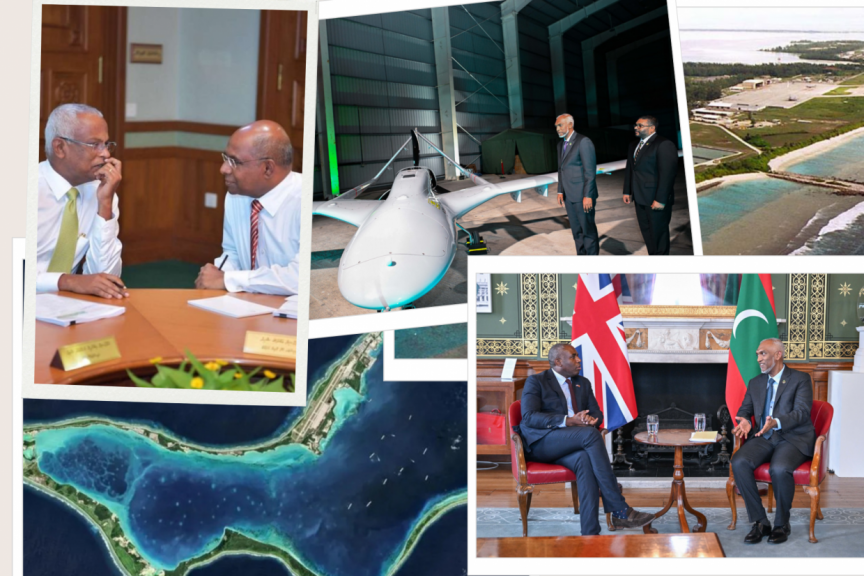
Whether the Maldives’ territory was lost through negligence or deliberately ceded, reclaiming that territory is essential and cannot be ignored. It is encouraging that President Dr. Mohamed Muizzu periodically reiterates his commitment to reclaiming the territory, in line with his presidential pledge. However, numerous factors must be carefully considered in pursuing this objective.
The current administration, under President Muizzu's leadership, has already made several missteps, particularly in foreign affairs. The conflict with India—Maldives’ closest ally and largest provider of assistance—and the subsequent retreat, exemplifies this. The Maldives did not merely lose one or two benefits as a result; the scale of loss is evident even when considering only free aid. Development momentum has stalled, and relations with other nations have weakened.
Geopolitics and diplomacy require patience and a composed approach, particularly for small nations. Even with two or three drones and a coast guard, small nations must accept reality. The power wielded by the United States, Russia, China, and Iran cannot be matched by small nations. If they attempt to do so, they will merely struggle and fail—nothing will result except a loss of credibility. This is not stated in opposition to patriotism; it is reality. It has not been long since the Maldives suffered that great humiliation in the matter with India. That is why we must learn to prioritize consultation, yield when necessary, and stand firm where required.
Defending the Maldives' sovereignty and its rights is absolutely necessary. However, the history of the world and current reality demonstrate that consistently using harsh language and displaying aggression is not always the best way to achieve objectives, especially for small nations. Prioritizing consultation and diplomacy is the best approach for small nations, particularly in sensitive matters such as territorial delimitation.
What's happening with the maritime issue?
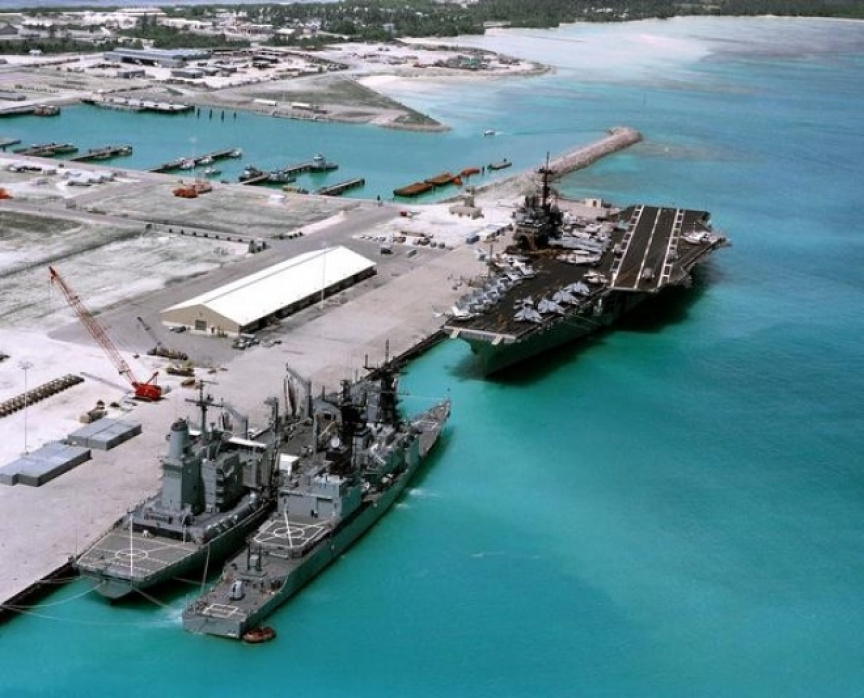
Mauritius brought the United Kingdom before the International Court of Justice (ICJ) in 2018 over sovereignty of the Chagos Islands, where major world powers—the US and UK—operate a military base. After examining the case, the ICJ issued an advisory opinion in February 2019, determining that sovereignty over Chagos belongs to Mauritius.
This was a major victory for Mauritius. Emboldened by the ICJ ruling, Mauritius submitted another case to the International Tribunal for the Law of the Sea (ITLOS) to delimit the maritime boundary between the Maldives and Chagos, since Chagos would now be under Mauritian jurisdiction. Previously, since the British Indian Ocean Territory (including Chagos) was considered British territory, the maritime boundary between Mauritius and the Maldives had not been delimited, nor was it necessary at that time.
This is where the Maldivian political scene began to intensify—or where former President Ibrahim Mohamed Solih began to be accused of “selling” maritime territory with a letter sent to the Mauritian Prime Minister.
When the Exclusive Economic Zones (EEZ) of the Maldives and Mauritius were re-delimited, taking 200 nautical miles from each country, an overlapping area of approximately 95,000 square kilometers remained. This was divided between the two countries: the Maldives received 47,232 square kilometers, and Mauritius received 45,331 square kilometers.
Military operation or diplomacy?
This government came to power promising to reclaim the maritime territory allegedly lost to the Maldives by that ruling. In his presidential address last Thursday, President Muizzu stated that the government does not accept that any changes have occurred to the territories described in the Maldivian Constitution and laws. He announced that he would submit amendments to include the 200 nautical mile maritime zone in law.
He described the lost maritime territory as something “given away” by former President Solih’s government. He said he would retract Solih’s letter to the Mauritian president and announced the formation of a presidential commission to examine the matter.
Not long after that statement, something surprising occurred. Although ITLOS had ruled on delimiting the disputed maritime boundary between the Maldives and Mauritius, following President Muizzu’s declaration that the 200 nautical mile zone still belongs to the Maldives, the Defense Ministry announced that the Maldivian military would protect and patrol that territory.
The Defense Ministry stated that the 200 nautical mile EEZ from the Maldives’ archipelagic baselines is the Maldives’ Exclusive Economic Zone according to law. It stated that, except for the July 31, 1976 “Determination of the Trijunction Point in the Gulf of Mannar” agreement, there is no agreement with any country that would result in the loss of any portion of Maldivian maritime territory.
The Ministry stated that, except for the northern boundary, which has been delimited, the government believes the Maldives has a 200 nautical mile EEZ around the country’s waters. Therefore, maintaining that territory is the military’s responsibility according to law, and the military will patrol it to the best of their ability with sincerity, care, and steadfastness.
Shortly after, the MNDF announced the launch of a surveillance operation in the southern Maldives using vessels gifted by Turkey and expensive drones purchased by the Maldives.
On this matter, the UK has stated this is not a Maldivian issue—it is a matter between the UK and Mauritius. The US has supported the UK’s position. Shortly after, Indian Prime Minister Narendra Modi also indicated India stands with Mauritius. These major world powers have made clear they stand together.
What has the Maldives done?
According to former Assistant Prosecutor General Jihad Anees, ITLOS rulings are binding decisions that must be respected and acted upon by state parties to the Law of the Sea Convention. ITLOS rulings cannot be appealed.
However, Jihad, who has higher education in international maritime law, said that because ITLOS accepted the case based on the ICJ advisory opinion—a ruling that contains many academically debatable elements and concerning aspects—it is important for the Maldives to take swift action in its interest. He said in certain circumstances, ITLOS rulings can be submitted for “revision.” Therefore, it is important to study the ITLOS ruling to see if circumstances exist under ITLOS Rules of Procedure, or if further action can be taken based on international law and ICJ work.
However, Jihad does not believe that military operations should replace international law, consultation with nations, or diplomatic principles.
A former experienced judge speaking on this matter said that ignoring a court’s ruling would damage the Maldives’ international reputation and cannot be done in that way.
“The President of the Maldives will always change periodically, but the state continues long-term. If an unjust decision has been made, we should proceed to the next stage. Stamping our feet and insisting ‘it’s this way, that way’ will damage the country’s reputation,” said the judge who served on senior courts for many years.
A highly qualified legal expert who has held senior government positions said that since the international court has ruled a certain way on the maritime and Chagos issues, there is nothing more that can be done legally. If another solution is desired, what needs to be done is work through diplomatic channels.
“Even if a court rules a certain way, can’t ways still be found through consultation? It’s not a matter for the court anymore,” the expert said.
“There are different interests of different countries internationally. For example, America might want something. Then the Maldives can talk with America about what to concede and what the Maldives should receive. Similarly with the British. We can talk with Mauritius too. That’s the way forward now.”
The expert said the government needs to seek a political and diplomatic solution to this matter—through consultation—and that coast guards and drones will not solve the problem.
A scholar with higher education in Political Science who studies international news said the biggest mistake made so far regarding the Maldives was not claiming ownership of Chagos. To have a voice on such matters internationally, one must first make claims.
“The British are saying we have no role in this. So I see the President is doing that now. If we stay engaged in this from now on and make claims, even 40 years from now we’ll have a say in it,” he said.
“I see him fighting for it. We won’t get that territory right now. I don’t think it will be particularly difficult to do.”
A comment from the Defense Ministry was sought for this report; however, no comment had been received at the time of publication.
The most important thing in achieving any objective is to accept reality and proceed along the proper path toward a solution—not by displaying toughness or power. Therefore, regarding the maritime issue, the Maldives should act in accordance with that principle. Diplomacy should be prioritized, as matters are resolved through consultation. Drones and coast guards will not resolve the issue and may in fact worsen it.


