
date_range
Sunday 01 Feb 2026


 LOCAL EDITION
close
 LOCAL EDITION


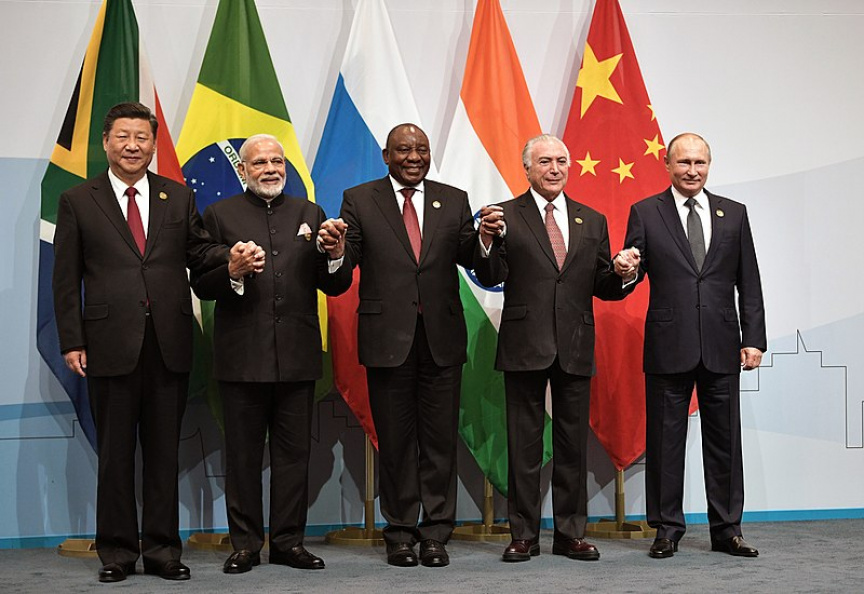
Leaders of the BRICS nations; Brazil, Russia, India, China, and South Africa, stand united at the 17th BRICS Summit that was held in Rio de Janeiro, Brazil, from July 6-7, 2025. (Photo/BRICS)
Major emerging economies are quietly cooking up new ways to move money around the world, ways that, over time, could loosen the world’s dependence on the US dollar and the Western‑controlled banking group chat known as SWIFT.
Yes, imagine that: countries like us having more than one door to knock on when we need to trade.
The BRICS bloc, now with extra toppings like Saudi Arabia, UAE and Egypt, has been experimenting with settling trade in local currencies and even testing gold‑linked systems. Nobody is trying to overthrow the dollar overnight. They’re just building parallel rails, so if one track gets blocked, trains can still run.
India proposes linking BRICS digital currencies for trade settlements.
— EquiBharat (@EquiBharat) January 31, 2026
No common currency.
No policy surrender.
Lower dollar dependence.
Faster cross-border payments.
Clear strategic positioning.#BRICS #DigitalRupee #CBDC #india #currency pic.twitter.com/i5cI1juyob
Local‑currency settlement:
More BRICS countries are trading with each other using their own money, rubles, yuan, rupees, instead of always converting everything into dollars first. It’s like finally paying your expatriate staff in rupees instead of borrowing dollars from someone else.
New payment platforms:
They’re also building digital systems (like mBridge) that let central banks send money to each other directly. Think of it as banks texting each other without going through the big Western‑run group chat.
Gold‑linked infrastructure:
Some BRICS members are expanding gold vaults and using gold‑based settlement channels. Basically: “If we don’t want to use dollars, we can use something shiny that everyone trusts.”

Some analysts even talk about a future BRICS “unit”; not a currency you can hold, but a kind of digital measuring stick partly backed by gold. But that’s still in the “ideas and experiments” stage, not something you’ll see on an exchange rate board anytime soon.
Not by a long shot yet, but the world is definitely rearranging the furniture.
BRICS officials say they’re not trying to kill the dollar, they just don’t want to panic every time the US raises interest rates or decides to sanction someone. And realistically, the dollar still dominates global reserves (oil), trade, and financial markets.
What’s happening now is more like slow diversification:
more trade in local currencies
more gold in central bank vaults
more payment options that don’t rely on SWIFT
It’s not a revolution. It’s more like countries quietly installing a backup generator so they’re not left in the dark when the main power line flickers.
And honestly, if you look at the world right now, from financial scandals to leaked files to governments everywhere scrambling to clean up all kinds of messes, it makes sense that countries like India are exploring backup financial routes. Not because anyone is plotting a rebellion, but because having more than one way to move money means fewer excuses later.
No country, no matter how tiny or crisis‑struck, should have to say, “Oops, we fell into a debt trap because we only had one system to rely on.” More options mean more control, and more control means fewer surprises on the national balance sheet.


