date_range
Monday 09 Feb 2026


 LOCAL EDITION
close
 LOCAL EDITION


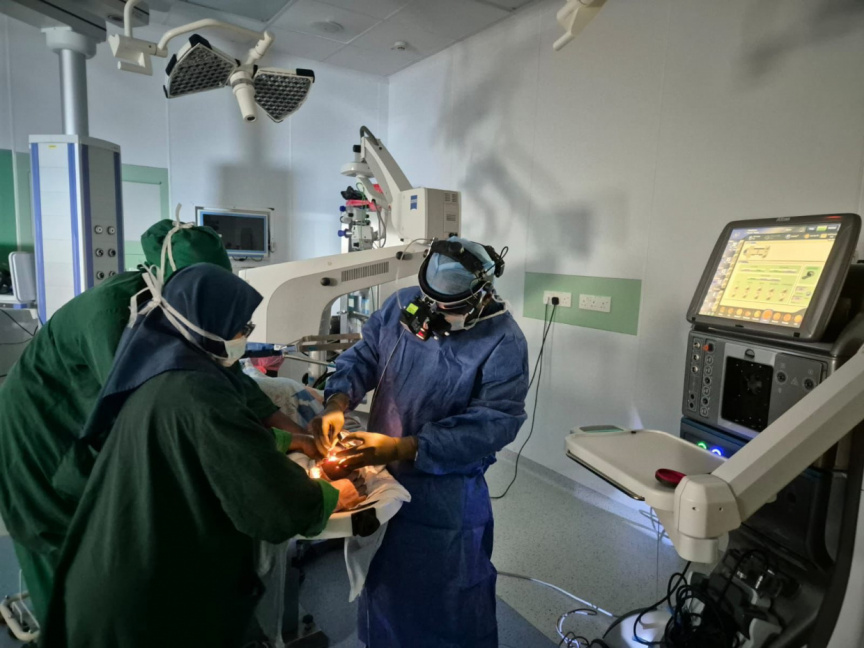
Indira Gandhi Memorial Hospital (IGMH) introduces retina laser treatment for premature infants. (X Photo/Ibrahim Abdul Razzaq Haleem)
A performance audit has revealed that more than MVR 3 billion was spent on medical treatment outside the Aasandha scheme between 2019 and 2024, prompting calls for legal reforms to control rising healthcare costs.
According to the report, the state spent a total of MVR 3,015,807,625 on medical treatment outside Aasandha, with costs rising at an average annual rate of 28 percent. In 2024 alone, MVR 872 million was spent outside the scheme, equivalent to 26 percent of Aasandha’s total expenditure that year.
The audit warns that if current trends continue, off-scheme medical spending will surpass Aasandha’s own budget by 2031.

Breakdown of off-scheme spending:
NSPA: Up 38 percent year-on-year
MNDF and police budgets: Up 23 percent
Other institutional health insurance: Up 6 percent
Zakat Fund medical aid: Up 3 percent
NSPA alone spent over MVR 1.5 billion during the period, with 56 percent spent on treatment in Maldives and 44 percent abroad. The number of cases rose by 80 percent, while total expenditure surged by 409 percent. The audit notes that NSPA’s aid delivery does not align with the Social Security Act’s targeting requirements.

Institutional budgets accounted for MVR 1.3 billion, with 88 percent spent on medical treatment for police, soldiers, and their families. From 2019 to 2024, MVR 619 million was spent on police-related treatment and MVR 601 million on MNDF-related treatment. Annual spending rose by 23 percent for MNDF and 24 percent for police.
Key concerns flagged:
Rising service prices at private hospitals
Lack of price regulation by the Health Ministry
Absence of coordination and data-sharing between aid agencies
Growing number of beneficiaries
Weak internal controls enabling misuse
Performance Audit on the governance and sustainability of medical assistance and Insurance Schemeshttps://t.co/Ph6YSVLgFM pic.twitter.com/BRtwGF5ZV8
— AGO (@AuditMV) January 19, 2026
Audit recommendations:
Introduce legal amendments to regulate healthcare pricing
Hold service providers accountable for cost control
Review medical aid schemes for MNDF and police families
Establish a centralized system to detect duplicate aid applications
Enforce bill submission and penalize non-compliance
Ensure fair and equitable reimbursement practices
Introduce targeted subsidies for vulnerable groups
The report calls for urgent policy reforms to ensure the sustainability and equity of state-funded medical assistance.